
 Author: Steve Burchett I was a freshman in high school when the Lord saved me through hearing the gospel at a weekly Fellowship of Christian Athletes meeting at my public high school. Once converted, I used a devotional provided by that ministry which amounted to reading a few verses a day and then a few paragraphs of teaching on that part of the Bible. I’m grateful I was pointed to the need to be in the Bible regularly, but looking back, it was an insufficient amount of time not only for a young believer, but any follower of Jesus. George Muller had a similar experience with the Bible when just a new believer. He eventually became famous for caring for orphans in Bristol, England (over 10,000 in his lifetime), all while never making needs known to anyone but God. Yet initially he writes that his daily spiritual disciplines were out of order, especially regarding Bible intake. When Muller was 71 (he died in 1898 at the age of 93), he was addressing young believers when he said the following. For the first four years of my Christian life I did not carefully read the Word of God. I used to read a tract, or an interesting book, but I knew nothing of the power of the Word. I read very little of it, and the result was, that, although a preacher then, yet I made no progress in the divine life. And why? Just for this reason — I neglected the Word of God. [Valuable Selections from the Writings of George Muller, Granted Press, 38-9]. In the fifth year of his life as a believer, Muller got serious about “attending regularly to reading through the Scriptures” — starting at the beginning of the Old Testament and the New Testament and reading alternatively until completing the whole Bible, and then starting over. His Bible reading led to the formulation of many critical doctrines that strengthened his confidence in God and shaped his ministry, but he was most concerned about partaking of what he called “food for my own soul” (32). At one point in his address to young converts, he urges the reading of Scripture “with reference to your own heart,” and then says, “Ask yourselves, how does this suit me, either for instruction, for correction, for exhortation, or for rebuke? How does this affect me? If you thus read, and get the blessing in your own soul, how soon it will flow out to others!” (41). Sixteen years into his life as a Christian, Muller made a significant discovery about Bible intake that was immensely helpful the rest of his life. I saw more clearly than ever, that the first great and primary business to which I ought to attend every day was to have my soul happy in the Lord. The first thing to be concerned about was not how much I might serve the Lord, how I might glorify the Lord; but how I might get my soul into a happy state, and how my inner man might be nourished. For I might seek to set the truth before the unconverted, I might seek to benefit believers, I might seek to relieve the distressed, I might in other ways seek to behave myself as it becomes a child of God in this world; and yet, not being happy in the Lord, and not being nourished and strengthened in my inner man day by day, all this might not be attended to in a right spirit. Before this time my practice had been, at least for ten years previously, as an habitual thing, to give myself to prayer, after having dressed in the morning. Now I saw, that the most important thing I had to do was to give myself to the reading of the Word of God and to meditate on it, that thus my heart might be comforted, encouraged, warned, reproved, instructed; and that thus, whilst meditating, my heart might be brought into experimental communion with the Lord. (31-2). Muller’s discipline of beginning in the Bible ultimately enhanced his prayer life: “The result I have found to be almost invariably this, that after a vey few minutes my soul has been led to confession, or to thanksgiving, or to supplication; so that though I did not, as it were, give myself to prayer, but to mediation, yet it turned almost immediately more or less into prayer” (32). George Muller was not a “super human” that woke up every day singing “Amazing Grace.” He needed grace, he needed the joy and power that comes from fellowship with God, he needed to hear God’s promises, so he opened his Bible and was fed. We are no different. Some of us are somewhat grumpy in the morning, while others are (strangely) raring to go even without a cup of coffee! But we all need Jesus from the start. I’m not exactly sure what this might look like in your life. Most of us can carve out some time in the morning to read the Bible and allow that to prompt us to pray. But don’t rush. Meditation is critical. Listen to Muller one last time. If you merely read the Bible, and no more, it is just like water running in at one side and out at the other. In order to be really benefitted by it, we must meditate on it. We cannot all of us, of course, spend many hours, or even one or two hours each day in this manner. Our business demands our attention. Yet, however short the time you can afford, give it regularly to reading, prayer and meditation over the Word, and you will find it will well repay you. (41) Copyright © 2026 Steve Burchett Permission granted for reproduction in exact form. All other uses require written permission. Find more free articles at www.bulletininserts.org, a ministry of Christian Communicators Worldwide: www.ccwtoday.org
0 Comments
George Mueller (1805—1898), whose full name was Johann George Ferdinand Mueller, was a preacher, evangelist, and prominent member of the Plymouth Brethren Church. He is best remembered for his work of starting and directing a large orphanage in England. Born in what was then known as Prussia (modern-day Germany), Mueller lived out his early years in thievery and dishonesty. In 1825, while attending divinity school at the University of Halle, he went to a prayer meeting at the house of a friend, realized his sinful condition, and placed his faith in Jesus (see Romans 3:22–24). According to Mueller’s own testimony in his 1855 book, A Narrative of Some of the Lord’s Dealing with George Muller, “I understood something of the reason why the Lord Jesus died on the cross, and suffered such agonies in the Garden of Gethsemane: even that thus, bearing the punishment due to us, we might not have to bear it ourselves” (p. 13). Once he became a follower of Christ, Mueller found that he no longer wanted to live in sin, and he forsook his old ways of living. In 1830 Mueller became a preacher in Teignmouth, England. There he became associated with the Plymouth Brethren. Following the distinct teachings of the Plymouth Brethren, Mueller did not accept a salary for his preaching, but rather lived off voluntary offerings. Also, George Mueller ended the popular method of collecting money through pew rentals in the church he served. Such rents were seen by Mueller as discriminatory toward the poor. Early in his ministry, George Mueller aimed to assist missionaries and Sunday school programs in various churches. He also distributed Bibles and gospel tracts. It’s estimated that Mueller gave away more than 250,000 Bibles in his lifetime. Mueller, alongside his first wife, Mary, began caring for orphans in Bristol in 1832. Orphans during this time experienced terrible hardship and poor living conditions. Often, they were sent to workhouses or factories, which had harmful working environments. Scripture repeatedly commands Christians to care for orphans (Psalm 146:9; Isaiah 1:17; James 1:27), and George Mueller and his wife obeyed those commands, caring for orphans in their own home until they exceeded their housing capacity and received complaints from neighbors. Mueller knew they would need a larger building and so, over the course of time, built five houses in the Ashley Down area of Bristol. Throughout its history, the Ashley Down Orphanage helped to care for around 18,000 children. All funding for the building of the houses and caring for the orphans came from freewill offerings for which Mueller prayed. He never asked people for money nor canvassed believers for donations. Mueller trusted that God would provide him with what he needed, and God did (see Matthew 6:25–33). One of the most well-known stories of Mueller’s faith involves the time when he trusted God to provide the orphans with breakfast one morning. Nothing was available for the children to eat, but Mueller and the children prayed. Soon after, a nearby baker brought bread to the orphans, stating how God had laid a burden upon his heart to bring fresh bread. A little time after, the milkman arrived, asking if the orphans could use fresh milk, since his cart had broken down. God had provided the orphans with breakfast. Mary died in 1870. A year later, George Mueller married again, and in 1875 he and his second wife, Susannah, embarked on a 17-year missionary tour, in which he spoke evangelistically about his trust in the Lord to provide. The couple traveled extensively, visiting a total of 42 countries including cities in Europe, India, China, and Australia. In America, Mueller met President Hayes in the White House. George Mueller died in Bristol in 1898 at the age of 92. George Mueller’s life demonstrated the truth of James 5:16: “The prayer of a righteous person is powerful and effective.” Truly, this Prussian preacher had a rich prayer life that stemmed from his strong faith in Jesus Christ. And the Lord showed Himself to be faithful. https://www.gotquestions.org/George-Mueller.html Aug. 6. Without one single penny in my hands the day began. The post brought nothing, nor had I yet received anything, when ten minutes after ten this morning the letter bag was brought from the Orphan-Houses, for the supplies of today.—Now see the Lord's deliverance! In the bag I found a note from one of the labourers in the OrphanHouses, enclosing two sovereigns, which she sent for the Orphans, stating that it was part of a present which she had just received unexpectedly, for herself. Thus we are supplied for today. In the afternoon, when I had now again nothing at all in hand, as I had paid out this 2l., there was brought to me from Oxford 1l. 2s. A sister also gave 2s. 6d. “There is not a more blessed and powerful weapon for the children of God, than that they should give themselves to prayer. For thus they can have the power of God on their side—the almighty power of God. And by making use of this power, through the instruments of prayer in all things we need, we can have the infinite wisdom of God brought to work for us, and have God Himself at our side, as children of God. Therefore we should seek to make a far better use than ever we have clone of prayer. And you, my beloved Christian friends, who are in the habit of meeting often at the noonday prayer meeting, expect great things at the hands of God; look out for wondrous blessings, and you will find how ready He is to give those things which we ask for.” 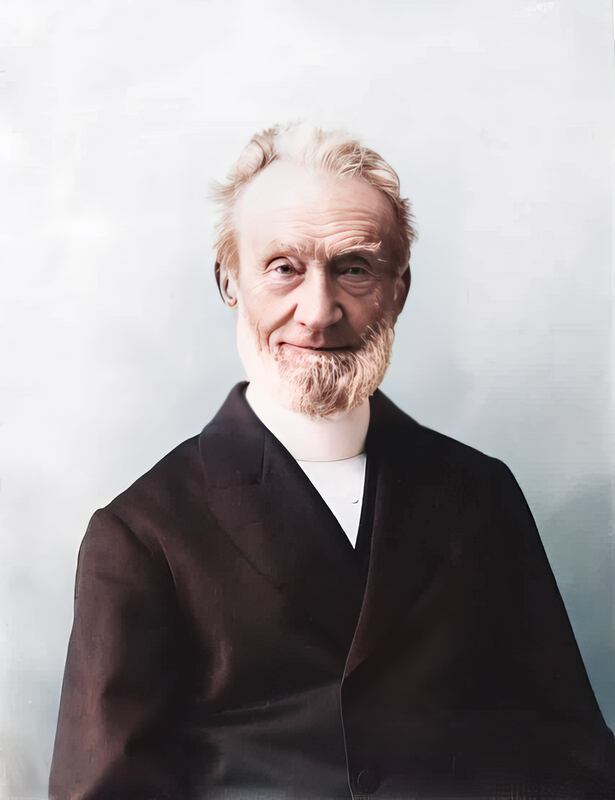 "When I heard George Muller some years ago, there was nothing of oratory in what he said—but then there was George Muller behind it—and every syllable had weight. That blessed man spoke as one who had experienced what he said. His long life of faith in God made every word powerful with the heart and conscience." - C.H. Spurgeon Charles Spurgeon Speaking of George Müller On his fiftieth birthday, Rev. C. H. Spurgeon was interviewed in reference to his long and eventful ministerial life, especially as to his confidence in the efficacy of prayer. Being asked whether he had in any way modified his views, he replied: Only in my faith growing far stronger and firmer than ever. It is not a matter of faith with me, but of knowledge and everyday experience. I am constantly witnessing the most unmistakable instances of answers to prayer. My whole life is made up of them. To me they are so familiar as to tease to excite surprise; but to many they would seem marvelous, no doubt. Why, I could no more doubt the efficacy of prayer than I could disbelieve the laws of gravitation. The one is as much a fact as the other, constantly verified every day of my life. Elijah, by the brook Cherith, as he received the daily rations from the ravens, could hardly be a more likely subject for skepticism than I. Look at my Orphanage. To keep it going entails an annual expenditure of about ten thousand pounds. Only one thousand four hundred is provided for by endowment. The remaining eight thousand six hundred comes to me regularly in answer to prayer. I do not know where I shall get it from day to day. I ask God for it, and he sends it. Mr. Muller, of Bristol, does the same on a far larger scale, and his experience is the same as mine.  A sister in the Lord in Ireland, who did not see her acceptance before God, and who was habitually without the assurance that she is a child of God, that she is born again, that her sins are forgiven, and that she shall be saved, in her distress of mind wrote to me about this time. As her case is by no means a solitary one, but as there are so many children of God who do not know that they are children of God; as there are so many whose sins are forgiven who do not know that they are forgiven; and as there are so many who will be saved, who do not know that they will be saved, and who are continually afraid of what would become of them, were they to be taken out of the world:—I have thought it well to say something here on this most important subject. I. Question. How may I obtain the knowledge that I am a child of God, or that I am born again, or that my sins are forgiven, or that I shall not perish but have everlasting life? Answer. Not by my feelings, not by a dream, not by my experience being like this or that ones, or unlike this or that ones; but this matter is to be settled, as all other spiritual matters, entirely by the revealed will of God, the written word of God, which is the only rule, the only standard for believers. II. Question. By what passages, then, for instance, may I make out that I am a child of God, or born again? Answer. 1. In 1 John v. 1, it is written: "Whosoever believeth that Jesus is the Christ is born of God." The meaning of these words is evidently this, that every one (whether young or old, male or female, one who has lived an outwardly moral or immoral life,) who believes that the poor, despised Jesus of Nazareth, of whom we read in the New Testament, was the promised Christ or Messiah, such a one is no longer in his natural state, but is born again, is born of God, is a child of God. The question therefore is, Do you believe that Jesus, who was born at Bethlehem, and crucified under Pontius Pilate, is the promised Saviour, the Messiah, the one for whom the Jews were to look? If so, you are a child of God, else you would not believe it. It is given unto you to believe it. Millions may SAY that Jesus is the Saviour, the Messiah, but none BELIEVE it except the children of God. It proves me to be a child of God that I believe it; to none besides is it given to believe it, though millions might say so. Perhaps you say, I do not feel that I am born again, born of God, and I have therefore no enjoyment. Answer. In order that you may have the enjoyment, which is the result of the knowledge that you are a child of God, that you are born of God, or born again, you must receive Gods testimony. He is a faithful witness, He speaks nothing but the truth, and His declaration is, That every one who believes that Jesus is the Christ is born of God. If you receive this testimony of God, you, to whom by grace it is given to believe that Jesus is the Christ, cannot but be happy, from the fact that God Himself says, that you are His child. But if you will wait till you feel that you are a child of God, you may have to wait long; and even if you felt it, yet your feelings would be worth nothing; for either it might be a false feeling, or, though it were real, it might be lost the next hour. Feelings change; but the word of God remains unalterably the same. You have, then, without having had a dream about it, without having had a portion of the word in a more than usual way impressed upon your mind concerning the subject, without having heard something like a voice from heaven about it, to say to yourself: If I believe that Jesus is the promised Messiah, I am a child of God. And then, from a belief of what God declares in this passage concerning you who believe that Jesus is the Christ, even that you are His child, spring peace and joy in the Holy Ghost. Answer 2. In Galatians iii. 26, it is written: "Ye are all the children of God by faith in Christ Jesus." The question here again is: Do I believe in the Lord Jesus? Do I depend upon Him alone for the salvation of my soul? If so, I am a child of God, whether I feel it or not. Answer 3. In John i. 1113, it is written of the Lord Jesus: "He came unto His own, and His own received Him not. But as many as received Him, to them gave He power (or the right or the privilege) to become the sons of God, even to them that believe on His name: which were born, not of blood, nor of the will of the flesh, nor of the will of man, but of God." The question here again is simply this, Have I received the Lord Jesus, i.e., Do I believe in His name? If so, I am born of God, I am a child of God, else I should never have believed in the Lord Jesus; for none but the children of God do believe in Him. III. Question. How may I know that my sins are forgiven? Have I to wait till I feel that they are forgiven, before I may take comfort concerning this matter? Or, must I wait till I have in some powerful way a portion of the word of God applied to my mind, to assure me of it? Answer. This point is again only to be settled by the word of God. We have not to wait till we feel that our sins are forgiven.—I myself have now been a believer for more than nineteen years (i.e. in the year 1845). How long it is, since I have had no doubt whatever about the forgiveness of my sins, I cannot tell with certainty; but this I am quite sure of, that ever since I have been in England, which is now about sixteen years (in 1845), I have never once had a single moments doubt that my sins are all forgiven; and yet I do not remember that I even once have felt that they were forgiven. To know that they are forgiven, and to feel that they are forgiven, are two different things.—The way to settle, whether our sins are forgiven, is, to refer to the word of God alone with reference to it. In Acts x. 43, it is written concerning the Lord Jesus, "To him give all the prophets witness, that through His name whosoever believeth in Him shall receive remission of sins." All the prophets speaking under the immediate power of the Holy Spirit, bore testimony, that through the obedience and sufferings of the Lord Jesus, whereby He becomes our Saviour or is our Jesus, all who believe in Him for salvation, who depend upon Him and not upon themselves, who receive Him to be the one whom God declares Him to be, should receive the forgiveness of their sins. The questions therefore to be put to ourselves are simply these: Do I walk in utter carelessness? Do I trust in my own exertions for salvation? Do I expect forgiveness for my sins on account of living a better life in future? Or, do I depend only upon this, that Jesus died upon the cross to save sinners—and that Jesus fulfilled the law of God to make sinners righteous? If the latter is the case, my sins are forgiven, whether I feel it or not. I have already forgiveness. I shall not have it merely when I die, or when the Lord Jesus comes again; but I have it now, and that for all my sins. I must not wait to feel that my sins are forgiven, in order to be at peace, and in order to be happy; but I must take God at His word, I must believe that what He says in true, and He says, "That whosoever believeth in the Lord Jesus should receive remission of sins;" and when I believe what God says, peace and joy will be the result. Again, in Acts xv. 8, 9, it is written with reference to us Gentile sinners: "And God which knoweth the hearts, bare them witness, giving them the Holy Ghost, even as He did unto us; and put no difference between us and them, purifying their hearts by faith." Here we see how the guilt is to be removed from the heart, how we can get a clean heart, obtain the forgiveness of our sins,—even by faith in the Lord Jesus. Depending upon the sufferings of the Lord Jesus in the room of sinners, and depending upon His obedience in fulfilling the law of God, His sufferings are considered as endured by us, His obedience as if found in ourselves: in Him (if we believe on Him) we are considered to have hung on the cross, and therefore were punished in Him, on account of which God, though perfectly holy and just, can forgive us our sins for Jesus sake, as well as reckon us righteous, through faith in the Lord Jesus, who in the room of those who believe on Him fulfilled the law of God. I would here by the way especially warn against one error, which is, that persons say, I can believe that Jesus is the Christ, the Saviour, that through Him alone the forgiveness of sins is to be obtained, and I do depend on Him alone for forgiveness, but I desire to know that He is my Christ, my Saviour, and because I am not sure about that, I can have no peace. Now, the Gospel which is preached in the New Testament is not, you must believe that Jesus of Nazareth is your Christ, your Saviour, but that He is the Christ, the Saviour; and if you believe that, you have a right to look upon Him as your Saviour. IV. Question. How may I know that I shall be saved? Answer. "If thou shalt confess with thy mouth the Lord Jesus, and shalt believe in thy heart that God hath raised Him from the dead, thou shalt be saved." Rom. x. 9. The point is simply this: Do I confess with my mouth the Lord Jesus? Do I own Him by the confession of my mouth before men, and do I believe in my heart that Jesus of Nazareth who was crucified was not left in the grave, but was raised again by God on the third day? If so, I shall be saved. For while there may be the confession of the Lord Jesus with the month, without the person being finally saved, there does not go along with this the believing in the heart that God has raised Him from the dead, without the person, in whom both are found, being finally saved; for in none but the children of God are these two points found united together. We have here particularly to observe, that it is not written: If thou shalt say that God has raised Him from the dead; but if thou shalt believe in thine heart that God has raised Him from the dead, thou shalt be saved. I have, then, to take God at His word. If I do confess the Lord Jesus with my mouth, and do believe in my heart that God has raised Him from the dead, I shall be saved, though I do not feel it, though I am utterly unworthy of salvation, yea, though I am altogether deserving condemnation. I must not wait till I feel that I shall be saved before I take comfort; but I must believe what God says in this verse, and, out of that, peace and comfort will flow into my soul. Should, however, one or the other of the children of God, believe in his heart the resurrection of the Lord Jesus, if at the same time he has never made confession of the Lord Jesus with his mouth, he cannot be surprised that the assurance about his salvation is wanting to him; yet if both be found in you, my dear reader, God has been gracious to you, you are His child, you shall be saved. Further, in John iii. 16, it is written: "God so loved the world that He gave His only begotten Son, that whosoever believeth in Him should not perish, but have everlasting life." Notice here in particular: 1. It matters not how great a sinner I am. 2. The promise is positive concerning my salvation, if I believe in the Lord Jesus. 3. I have only to believe in the Lord Jesus. No matter how it may have been with me hitherto; if only now I trust in and depend upon the Lord Jesus for salvation, I shall have everlasting life. Further, in Acts xvi. 30, 31, it is written: "Sirs, what must I do to be saved? And they said, Believe on the Lord Jesus Christ, and thou shalt be saved." Further, in John iii. 36, it is written: "He that believeth on the Son hath everlasting life; and He that believeth not the Son shall not see life; but the wrath of God abideth on him." As assuredly as I depend upon and trust in the Lord Jesus for the salvation of my soul, I shall be saved, I have already everlasting life; for He died, to deliver those who believe on Him from the wrath of God, under which all men are in their natural state; but if I do not believe in the Lord Jesus, the wrath of God, which rests upon all men in their natural state, will finally destroy me, if I remain without faith in the Lord Jesus; for then I reject the one only remedy, in refusing to take Jesus as my substitute, who bore the punishment that He might deliver the sinner from it, and who fulfilled the law of God that He might make the sinner who believes on Him a just one before God. V. Question. How may I know that I am one of the elect? I often read in the Scriptures about election, and I often hear about election, how may I know that I am a chosen one, that I am predestinated to be conformed to the image of the Son of God? Answer. It is written: "As many as were ordained, (i.e. appointed) to eternal life believed." Acts xiii. 48. The question therefore simply is this: Do I believe in the Lord Jesus? Do I take Him to be the one whom God declares Him to be, i. e. His beloved Son in whom He is well pleased? If so, I am a believer, and I should never have believed, except I had been appointed by God to eternal life—except I had been made by God to be a vessel of mercy. Therefore the matter is a very simple one: if I believe in the Lord Jesus, I am a chosen one,—I have been appointed to eternal life. Again, in Rom. viii. 29, 30, it is written: "For whom He did foreknow, He also did predestinate to be conformed to the image of His Son, that He might be the first-born among many brethren. Moreover, whom He did predestinate, them He also called: and whom he called, them He also justified; and whom He justified, them He also glorified." How are we justified, or constituted just ones, before God? By faith in the Lord Jesus. Rom. iii. 2026. Therefore if I believe in the Lord Jesus, it follows (on account of the inseparable connection of all the precious things spoken of in these two verses), that I have been foreknown by God, that I have been predestinated by Him to be conformed to the image of His Son, that I have been called, that I have been justified, and that, in the sight of God, I am already as good as glorified, though I am not as yet in the actual possession and enjoyment of the glory. The reason why persons who renounce confidence in their own goodness for salvation, and who only trust in the merits and sufferings of the Lord Jesus, do not know that they are the children of God, that their sins are forgiven, and that they shall be saved, generally arises from one of these things: 1. They do not know the simplicity of the Gospel; or, 2. They seek to settle it by their feeling; or, 3. They wait for some powerful impulse, or a dream, or something like a voice from Heaven to assure them of it, or for some passage being in a powerful way applied to their mind to assure them of it; or, 4. Because they are living in sin. Should the last be the case, then, however correctly we may understand the Gospel; however much we may desire by the Holy Scriptures alone to settle these questions; yea, however much in former times we may have enjoyed the assurance of the forgiveness of our sins, or of our being the children of God, or that we shall be saved: in such a state of heart all peace would be gone, and would not return as long as we live in sin. There may be found much weakness and many infirmities even in the believer who has assurance about these points; but the Holy Ghost does not comfort us, and will not comfort us, if we habitually indulge in those things which we know to be contrary to the mind of God. An upright, honest heart, is of the utmost importance in all divine things; and especially with reference to the assurance about our standing before God.  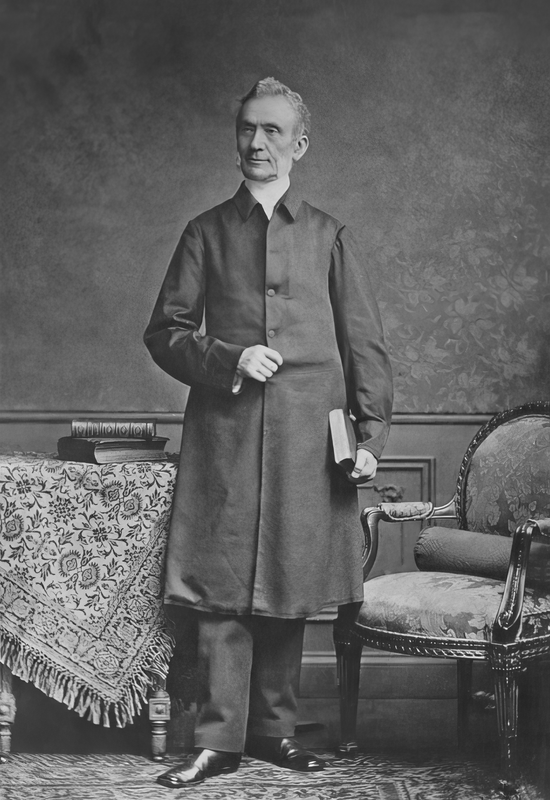 GEORGE MULLER, OF BRISTOL, ENGLAND. This mighty man of faith is too well known to the Christian world to need any introduction from us. We quote the following from a brief sketch of his life “The support of his orphanage amounts to $230,000 annually. The milk-bill amounts to $10,000 yearly! He has sometimes paid out as much as $27,500 in one day. In all, Mr. Muller has received for his orphanage and other works of a Christian and benevolent kind, a total of $4,275,000; and he declares that he never asked a human being for a sixpence! He has made it his uniform rule to go in prayer to Him who has the hearts of all men in His hands, and ask Him for all needed supply and men have been moved to give it; some giving out of their abundant wealth, and some out of their poverty. He has received as high as $45,000 in one donation, and scores of times $5,000. A principle of his has been never to contract a debt in connection with his orphanage. Often the last sixpence has been spent, and within a few hours either money must come or starvation but the money came without fail, and never were the children sent hungry to bed. Hundreds of times he has held two prayer-meetings in a day with his helpers, beseeching God to send them supplies for the next meal of food for the orphans; and in every case the Lord has graciously answered their prayer. In eleven years, he had received five thousand answers to prayer. In the course of his life he has received some thirty thousand answers to prayer within the same day of asking; and that for some things he had been praying every day for over thirty years, and the answer had not come as yet. He mentioned these things to encourage Christians patiently to wait on God. He had received answers after waiting fifteen, twenty, and thirty years. When in the deepest poverty, he never gives any human being the least intimation of his needs, either by word or look, but always carries every matter great and small to God, and continually rejoices in the Lord. He declares that his countenance never looks sad or anxious when in need, as he considers that would be dishonoring to God, and inconsistent with a perfect trust in Him. “He says: ‘When I first began allowing God to deal with me, relying on Him, taking Him at His word, and set out, over half a century ago, simply to rely on Him for myself, family, taxes, traveling expenses, and every other need, I rested on simple promises.’ I believed the word. I rested on it and practiced it. I ‘took God at His word.’ A stranger, a foreigner in England, I know seven languages, and might have used them perhaps as a means of remunerative employment; but I had consecrated myself to labor for the Lord. I put my reliance in the God who has promised, and He has acted according to His word. I’ve lacked nothing —nothing. I have had my trials, my difficulties, and my empty purse, but my receipts have aggregated tens of thousands of dollars, while the work has gone on all these years. “ — Shining Lights. |
Categories
All
Archives
August 2026
|

 RSS Feed
"The vigor of our spiritual life will be in exact proportion to the place held by the Bible in our life and thoughts."
- George Muller
- George Muller